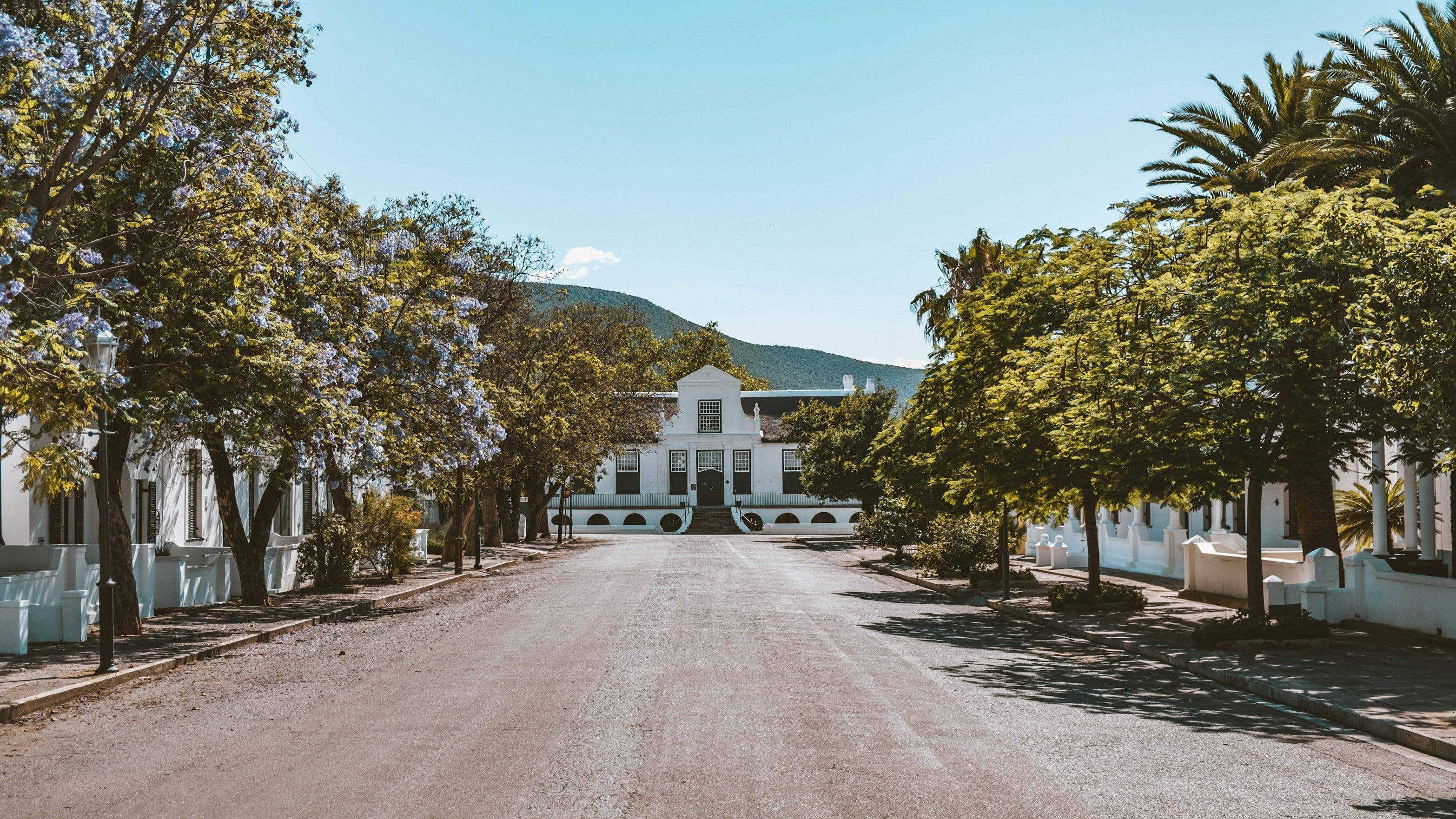
The fourth-oldest town in South Africa, Graaff-Reinet lies cradled in a bend of the Sundays River beneath the Sneeuberg Mountains. David Livingstone called it "the prettiest little town in all Africa," and more than a century later, it still captivates visitors with its remarkable concentration of historic buildings and dramatic Karoo landscapes.
With over 220 national monuments, more than any other town in South Africa, Graaff-Reinet is a living museum of Cape Dutch architecture. Through Spekboom, your accommodation booking directly supports local causes working to preserve this heritage and develop the community.
The Valley of Desolation and Camdeboo
The Valley of Desolation attracts around 100,000 visitors annually, and one look at those dolerite columns, formed by molten rock some 180 million years ago and exposed by aeons of erosion, explains why. This geological wonder, declared a national monument in 1939, sits within the Camdeboo National Park, which nearly encircles the town.
The 19,400-hectare park is home to mountain zebra, wildebeest, springbok, and gemsbok. The panoramic views from the Valley lookout point stretch across the entire Great Karoo, a landscape so vast it seems to curve with the earth.
Museums and heritage
Graaff-Reinet's museum complex tells the story of the Karoo through fossils, rock art, and the lives of those who shaped the region. The Old Library Museum houses the Lex Bremner fossil collection and the Mangaliso Robert Sobukwe Permanent Exhibition. The Hester Rupert Art Museum showcases modern South African art, while Reinet House features one of the largest living grape vines in the world.
The town's Cape Dutch legacy is on full display at the Drostdy Hotel, the magnificent Victorian Gothic Dutch Reformed mother church (reminiscent of England's Salisbury Cathedral), and along Stretch's Court, a restored lane of mid-19th-century cottages once home to emancipated slaves, now part of the Drostdy Hotel.
Karoo food and culture
You're in red meat country here, with Karoo lamb being the speciality: the sheep graze on aromatic Karoo bush, giving the meat its distinctive flavour. Traditional dishes like melktert, koeksisters, and rusks feature alongside contemporary cuisine at restaurants overlooking the Dutch Reformed Church.
The annual Karoo Lus Festival in September celebrates this agricultural heritage, while year-round you can taste South African agave spirits and browse shops selling mohair, a traditional Karoo fibre, and local crafts including Zulu and Ndebele jewellery.
Tourism with purpose
In Graaff-Reinet, your visit supports more than historic preservation, it helps build a sustainable future. Through Spekboom, a portion of every booking goes to causes working on education, conservation, and community development in the Karoo.


